Deixe uma Mensagem
Se estiver interessado nos nossos produtos e quiser saber mais detalhes, deixe uma mensagem aqui. Responderemos o mais breve possível.

Como funciona uma bomba de incêndio? Princípio de funcionamento da bomba de caminhão de bombeiros explicado
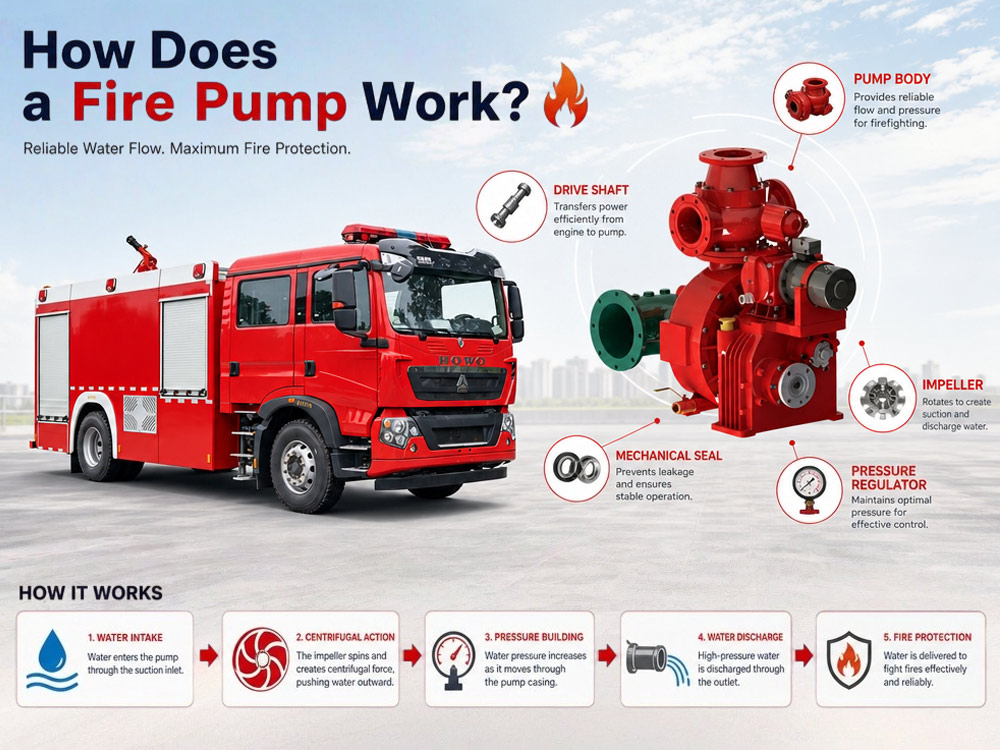
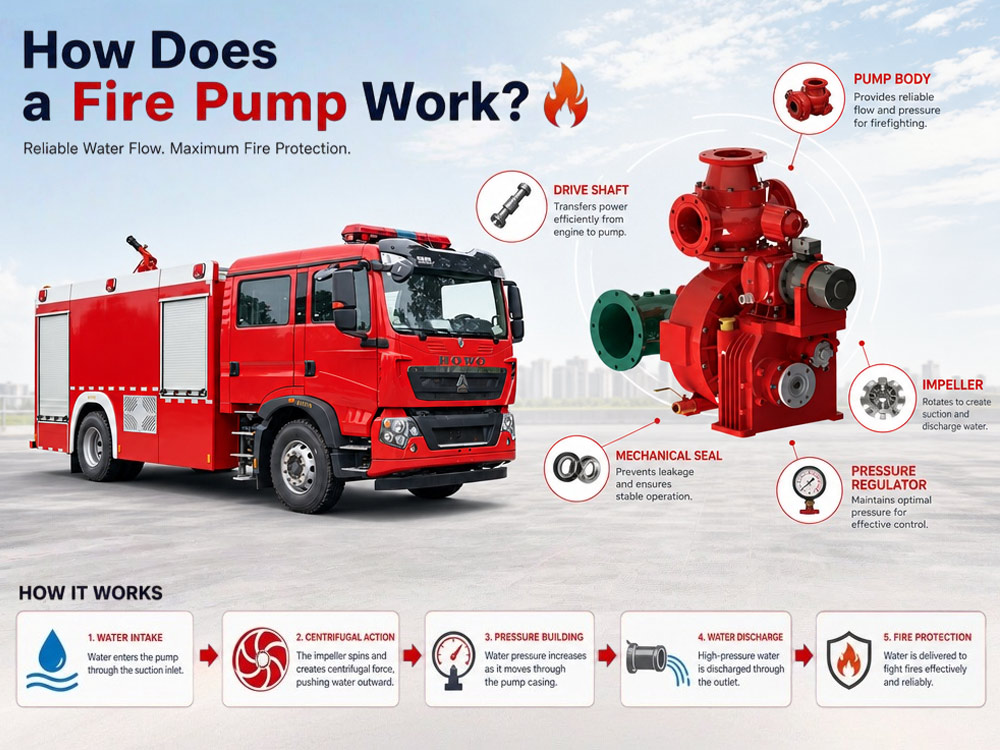
Uma bomba de incêndio é o coração do sistema de fornecimento de água de todo caminhão de bombeiros. Seja ao responder a um incêndio estrutural, emergência industrial, incidente em aeroporto ou operação em área de vegetação, a bomba de incêndioem um caminhão de bombeiros é responsável por fornecer água de alta pressão para mangueiras, monitores de incêndio e sistemas de espuma.Seu design de impulsor centrífugo e sistema acionado por PTO garantem pressão estável e altas taxas de fluxo, aumentando diretamente a eficácia do combate a incêndios em mais de 40%, enquanto reduzem o tempo de resposta em 3 vezes. Ela pode ser chamada de guardiã invisível das operações de combate a incêndios e a base técnica da resposta moderna a emergências.
Aprenda como uma bomba de incêndio funciona, incluindo seu princípio de funcionamento, principais componentes, processo de fluxo de água, geração de pressão e aplicações. Descubra como as bombas de caminhões de bombeiros fornecem abastecimento confiável de água para combate a incêndios e como escolher a bomba certa para seu veículo de combate a incêndio.Vamos aprender sobre isso hoje.
1. Impulsor: O componente rotativo que puxa a água e a lança para fora pela força centrífuga. Normalmente feito de bronze, aço inoxidável ou ferro fundido.
2. Carcaça da bomba: O compartimento que contém o impulsor e direciona o fluxo de água. Projetado para converter velocidade em pressão.
3. Tomada de força (PTO): A conexão mecânica que transfere a potência do motor da transmissão do caminhão para a bomba de incêndio.
1. A potência é transferida do motor através da PTO
O motor do caminhão aciona a PTO, que se conecta ao eixo da bomba. Quando o operador aciona a PTO, a potência do motor é redirecionada para girar o impulsor da bomba em alta velocidade.
2. O impulsor começa a girar
O impulsor gira a 1.500–2.500 RPM, puxando água para dentro da bomba pela entrada de sucção. As pás giratórias do impulsor criam uma zona de baixa pressão no centro, puxando água do tanque embarcado, hidrante ou fonte natural de água.
3. A força centrífuga aumenta a pressão da água
À medida que o impulsor gira, ele lança a água para fora pela força centrífuga. A velocidade da água aumenta conforme ela se move do centro para a borda externa do impulsor. A carcaça da bomba então converte essa velocidade em pressão, forçando a saída de água de alta pressão pela saída de descarga.
4. A água de alta pressão sai pela saída de descarga
A água pressurizada (normalmente 0,8–1,2 MPa) sai pela saída de descarga e é fornecida para mangueiras de incêndio, monitores de incêndio ou sistemas de proporção de espuma para operações de combate a incêndios.
A bomba de incêndio pode captar água de três fontes:
Tanque de água embarcado: A principal fonte de água para o ataque inicial. Capacidade típica: 2.000–12.000 litros. Fornece abastecimento imediato de água na chegada.
Hidrante de incêndio: Conectado por meio de mangueiras de abastecimento. Fornece fornecimento contínuo de água para operações prolongadas. A pressão do hidrante ajuda a bomba a manter o fluxo.
Fonte natural de água (sucção): Lagos, rios, lagoas ou piscinas. A bomba usa um sistema de escorva para remover o ar da mangueira de sucção antes da captação. Altura máxima teórica de elevação ao nível do mar: aproximadamente 10 metros (33 pés). Profundidade efetiva de sucção: normalmente 7–8 metros.
Processo de sucção:
Conectar a mangueira rígida de sucção à entrada da bomba
Submergir o filtro pelo menos 2–3 pés abaixo da superfície da água
Acionar o escorvador para remover o ar da mangueira e da bomba
O vácuo é criado, e a pressão atmosférica empurra a água para cima
A água enche a bomba, então a bomba centrífuga pressuriza a água
Entrada de sucção: Onde a água entra na bomba. Tamanho típico: DN100–DN150. Equipada com filtro para impedir a entrada de detritos.
Saída de descarga:Onde a água pressurizada sai. Tamanho típico: DN65–DN80 (saídas padrão). Equipada com válvulas para controlar o fluxo para mangueiras ou monitores. Múltiplas saídas permitem uso simultâneo.
Impulsor:O componente rotativo que cria o fluxo de água. Converte energia mecânica em energia cinética. Normalmente feito de bronze (resistente à corrosão), aço inoxidável (durável, longa vida útil) ou ferro fundido (econômico para aplicações padrão).
Carcaça da bomba:O alojamento que direciona o fluxo de água. Projetado para converter velocidade em pressão. Projetos comuns: carcaça tipo voluta (formato espiral para fluxo suave) e carcaça com difusor (para maior eficiência).
Sistema de escorva:Remove o ar da bomba e da mangueira de sucção antes da aspiração. Os tipos incluem:
Escorvador a vácuo:Projeto de palhetas rotativas ou pistão. Rápido e eficiente. O mais comum em caminhões de bombeiros modernos.
Escorvador de escape:Usa o escape do motor para criar vácuo. Simples, mas menos eficaz.
Escorvador elétrico:Acionado por motor. Pode realizar a escorva sem rotação da bomba. Protege o selo mecânico contra danos por funcionamento a seco.
Válvula de alívio de pressão:Evita a sobrepressurização. Abre quando a pressão excede o limite definido. Protege mangueiras, bomba e bombeiros.
Governador de pressão:Mantém automaticamente a pressão definida. Ajusta a rotação do motor para compensar mudanças no fluxo. Reduz a carga de trabalho do operador. Disponível no modo de pressão (mantém a pressão predefinida) e no modo RPM (mantém a velocidade predefinida do motor).
PTO (Tomada de Força):A conexão entre o motor e a bomba. Transfere a potência do motor para acionar a bomba. Caminhões de bombeiros normalmente usam PTO tipo sanduíche (montado entre o motor e a transmissão) para saída de potência total.
| Tipo de bomba | Vantagens | Aplicações típicas |
|---|---|---|
| Bomba centrífuga de estágio único | Alto fluxo, projeto simples, custo-benefício | Caminhões de bombeiros municipais |
| Bomba de incêndio de dois estágios | Maior pressão, modos alternáveis | Combate a incêndios em edifícios altos, longas extensões de mangueira |
| Bomba de incêndio montada no meio do chassi | Melhor equilíbrio, operação estável | Veículos de combate a incêndio padrão |
| Bomba de incêndio montada na traseira | Manutenção mais fácil, melhor resfriamento | Caminhões de aeroporto e industriais |
| Item de comparação | Bomba de incêndio | Bomba de água padrão |
|---|---|---|
| Pressão de trabalho | Alta (0,8–2,5 MPa) | Baixa (0,2–0,6 MPa) |
| Taxa de fluxo | Alta (1.200–6.000 L/min) | Moderada (500–2.000 L/min) |
| Operação contínua | Sim (projetada para uso prolongado) | Depende do modelo |
| Acionada por TDP | Sim | Geralmente não |
| Conformidade com normas de combate a incêndio | Sim (certificada pela NFPA, EN, GB) | Não |
| Áreas de aplicação | Combate a incêndios e resgate | Abastecimento de água industrial, agrícola e doméstico |
| Aplicação | Bomba recomendada | Motivo |
|---|---|---|
| Combate a incêndios municipal | Estágio único (1.200–3.000 L/min) | Custo-benefício, suficiente para a maioria dos incêndios |
| Edifícios altos | Dois estágios (2.000–4.000 L/min) | Maior pressão para elevação vertical |
| Usinas petroquímicas | Dois estágios (3.000–6.000 L/min) | Alto fluxo, pressão para incêndios industriais |
| Resgate em acidentes aéreos em aeroportos | Montada na parte traseira (4.000–6.000 L/min) | Alto fluxo, manutenção mais fácil |
| Combate a incêndios florestais | Estágio único (1.000–2.000 L/min) | Leve, portátil |
A bomba de incêndio gera pressão por meio da força centrífuga. Quando o impulsor gira, ele puxa a água para o centro e a lança para fora em alta velocidade. A carcaça da bomba converte essa água de alta velocidade em pressão ao desacelerá-la.
Fatores que afetam a pressão:
Velocidade do impulsor:Rotação mais rápida = maior pressão. A velocidade do impulsor é diretamente proporcional à rotação do motor.
RPM do motor:Maior velocidade do motor = impulsor mais rápido = maior pressão. Os operadores controlam a pressão ajustando o acelerador do motor ou usando o regulador de pressão.
Projeto da bomba:Bombas de dois estágios podem atingir maior pressão do que bombas de estágio único usando dois impulsores em série.
Diâmetro do tubo:Diâmetro menor = maior pressão, mas menor vazão. Diâmetro maior = menor pressão, mas maior vazão. O operador deve equilibrar pressão e vazão com base na tarefa de combate a incêndio.
Fonte de água:Um fornecimento adequado de água é essencial para manter a pressão. Um fornecimento insuficiente causa queda de pressão.
1. A bomba não consegue escorvar
Possíveis causas: Vazamento de ar na mangueira de sucção, filtro obstruído, sistema de escorva sem funcionamento.
Soluções: Verifique e aperte todas as conexões da mangueira de sucção; limpe o filtro; inspecione o sistema de escorva (bomba de vácuo ou escorvador elétrico) e faça o reparo se necessário.
2. Baixa pressão da água
Possíveis causas: Filtro obstruído, RPM do motor insuficiente, impulsor desgastado, ar no sistema.
Soluções: Limpe o filtro; aumente a velocidade do motor; inspecione o impulsor quanto ao desgaste e substitua se necessário; verifique vazamentos de ar e faça a escorva novamente.
3. Cavitação
Formação: A cavitação ocorre quando a bomba não recebe água suficiente. O impulsor gira em uma mistura de água e bolhas de vapor. Quando essas bolhas colapsam, elas criam ondas de choque que danificam o impulsor e causam forte oscilação de pressão.
Como evitar: Nunca opere a bomba mais rápido do que o fornecimento de água pode suprir; monitore a pressão de entrada; reduza a velocidade da bomba se o vácuo estiver muito alto; certifique-se de que o filtro não esteja obstruído.
4. Vazamento de água
Itens de verificação: Verifique todas as vedações e juntas; inspecione rachaduras na carcaça da bomba; certifique-se de que as válvulas de drenagem estejam fechadas; substitua imediatamente as vedações desgastadas.
5. Superaquecimento
Causas: Bomba funcionando a seco, resfriamento insuficiente, operação prolongada sem fluxo de água.
Dicas de manutenção: Nunca opere a bomba sem água; certifique-se de que as linhas de resfriamento estejam desobstruídas; deixe a bomba esfriar entre as operações; verifique regularmente a válvula de alívio térmico.
» VIII. Estudo de caso real: Atualização da bomba do departamento municipal de bombeiros
Contexto:
Um departamento municipal de bombeiros com uma frota de caminhões de combate a incêndio antigos precisava atualizar os sistemas de bombeamento de três veículos de primeira linha. As bombas existentes tinham dificuldade para manter a pressão durante operações de combate a incêndios em edifícios altos e frequentemente precisavam de reparos.
Desafio:
Pressão instável em alturas superiores a 50 metros
Captação lenta de fontes naturais de água (tempo de escorva >45 segundos)
Baixa vazão em alta pressão
Falhas frequentes de vedação e desgaste do impulsor
Solução:
Bomba de incêndio CB10/60 (60 L/s @ 1,0 MPa)
Escorvador elétrico a vácuo (melhora a velocidade de escorva)
Regulador automático de pressão (mantém a pressão estável)
Vedações e rolamentos da bomba atualizados
Novas mangueiras de sucção com filtros maiores
Resultados:
| Métrica | Antes | Depois |
|---|---|---|
| Pressão a 50 m de altura | 0,6 MPa | 0,9 MPa |
| Tempo de escorva | 45 segundos | 18 segundos |
| Taxa de vazão à pressão máxima | 40 L/s | 55 L/s |
| Substituições de vedação por ano | 4 | 0 |
A pressão aumentou 25%, o tempo de sucção foi reduzido em 35%, a eficiência no combate a incêndios melhorou significativamente e os custos de manutenção caíram 60%. O departamento relatou tempos de resposta mais rápidos e bombeamento mais confiável durante incêndios de grande escala.
1. Determine a taxa de vazão necessária
| Aplicação | Taxa de Vazão Recomendada |
|---|---|
| Combate a incêndios municipal | 30–60 L/s |
| Parques industriais | 60–100 L/s |
| Resgate em acidentes aéreos em aeroportos | 100+ L/s |
| Combate a incêndios florestais | 20–40 L/s |
| Edifícios altos | 40–80 L/s |
2. Determine a pressão necessária
| Aplicação | Pressão Recomendada |
|---|---|
| Combate a incêndios municipal | 0,8–1,0 MPa |
| Parques industriais | 1,0–1,2 MPa |
| Usinas petroquímicas | 1,2–1,4 MPa |
| Resgate e combate a incêndios em aeroportos | 1,0–1,2 MPa |
| Edifícios altos | 1,5–2,5 MPa |
3. Considere a fonte de água
Abastecimento por hidrante:Bomba de estágio único é suficiente. Não requer escorva.
Tanque a bordo:Estágio único ou dois estágios. Requer escorva para sucção.
Água natural (sucção):Requer bomba de vácuo. Dois estágios para alta elevação.
4. Tamanho e configuração do caminhão de bombeiros
| Chassi | Bomba recomendada |
|---|---|
| 4×2 | Estágio único, 1.200–2.000 L/min |
| 4×4 | Estágio único, 2.000–3.000 L/min |
| 6×4 | Dois estágios, 3.000–4.500 L/min |
| 8×4 | Dois estágios, 4.000–6.000 L/min |
P: O que é uma bomba de incêndio?
R: Uma bomba de incêndio é uma bomba centrífuga acionada pelo motor do caminhão por meio de um sistema de tomada de força (PTO). Ela retira água de tanques a bordo, hidrantes ou fontes naturais de água, aumenta a pressão da água girando um impulsor e fornece água de alta pressão para mangueiras ou monitores de incêndio durante operações de combate a incêndios.
P: Como uma bomba de incêndio aumenta a pressão da água?
R: O impulsor gira em alta velocidade (1.500–2.500 RPM), puxando a água para o centro e lançando-a para fora pela força centrífuga. A carcaça da bomba converte essa água de alta velocidade em pressão ao desacelerá-la. Maior velocidade do impulsor = maior pressão.
P: Uma bomba de incêndio é igual a uma bomba de água padrão?
R: Não. As bombas de incêndio são projetadas para maior pressão (0,8–2,5 MPa), maiores vazões (1.200–6.000 L/min) e operação contínua de emergência. As bombas de água padrão operam com menor pressão e não são projetadas para combate a incêndios ou sistemas acionados por PTO.
P: O que alimenta a bomba de um caminhão de bombeiros?
R: O motor do caminhão de bombeiros aciona a bomba de incêndio por meio de um sistema de tomada de força (PTO). Quando o operador aciona o PTO, a potência do motor é redirecionada para girar o impulsor da bomba. Não é necessário um motor separado.
P: Por que uma bomba de incêndio precisa de uma escorva?
R: Uma escorva remove o ar da bomba e da mangueira de sucção antes da captação de água de um lago, rio ou lagoa. Bombas centrífugas não conseguem movimentar água se houver ar no sistema. A escorva cria um vácuo, permitindo que a pressão atmosférica empurre a água para dentro da bomba.
P: Qual é a diferença entre uma bomba de incêndio de estágio único e uma de dois estágios?
A: Uma bomba de estágio único possui um impulsor e fornece alto fluxo a pressão moderada. Uma bomba de dois estágios possui dois impulsores em série e pode fornecer maior pressão. As bombas de dois estágios podem alternar entre o modo de volume (alto fluxo) e o modo de pressão (alta pressão).
Q: Uma bomba de incêndio pode captar água de um rio?
A: Sim. Uma bomba de incêndio pode captar água de rios, lagos, lagoas e piscinas por meio de um processo chamado sucção direta. O escorvador remove o ar da mangueira de sucção e da bomba, criando um vácuo. A pressão atmosférica empurra a água para dentro da bomba. Altura máxima prática de elevação: aproximadamente 7–8 metros.
Q: O que causa a cavitação da bomba de incêndio?
A: A cavitação ocorre quando a bomba não recebe água suficiente. O impulsor gira em uma mistura de água e bolhas de vapor. Quando essas bolhas colapsam, elas criam ondas de choque que danificam o impulsor. A cavitação é causada por operar a bomba mais rápido do que o fornecimento de água consegue suprir, filtros obstruídos ou elevação de sucção excessiva.
Q: Com que frequência uma bomba de incêndio deve passar por manutenção?
A: Verificações diárias (ruído, vibração, vazamentos), testes semanais (escorvador, regulador de pressão), inspeções mensais (impulsor, rolamentos, válvula de alívio), testes anuais de vazão total e testes hidrostáticos de pressão. A manutenção regular evita falhas inesperadas durante emergências.
Q: Como escolher a bomba de incêndio correta para meu caminhão de bombeiros?
A: Considere a vazão necessária (com base nos riscos de incêndio), os requisitos de pressão (com base na altura dos edifícios), a fonte de água (hidrante, tanque ou fonte natural), o chassi do caminhão de bombeiros (4×2, 4×4, 6×4, 8×4), a marca e a confiabilidade da bomba, além do suporte de manutenção e serviço. A bomba deve corresponder à potência do motor do veículo e à configuração da TDP.
As bombas de incêndio usam força centrífuga para aumentar a pressão da água. O impulsor puxa a água para dentro e a lança para fora, convertendo velocidade em pressão.
A maioria das bombas de caminhões de bombeiros é acionada por meio de um sistema de TDP (Tomada de Força). A potência do motor é redirecionada para a bomba, não sendo necessário um motor separado.
A água pode vir de tanques a bordo, hidrantes ou fontes de água abertas. A sucção direta de fontes naturais requer um escorvador para remover o ar da mangueira de sucção.
Os sistemas de escorva removem o ar antes da sucção direta de fontes naturais de água. Escorvadores a vácuo são os mais comuns, com escorvadores elétricos oferecendo proteção para vedações mecânicas.
O desempenho da bomba depende da vazão, da pressão, do tamanho do impulsor e da potência do motor. Adequar a bomba à tarefa de combate a incêndios é fundamental.
A manutenção adequada (diária, semanal, mensal, anual) melhora a confiabilidade e a vida útil. Testes regulares evitam falhas inesperadas durante emergências.
Compreender a operação da bomba ajuda os compradores a escolher as especificações corretas para seu caminhão de bombeiros. A bomba deve corresponder ao chassi, à TDP e aos requisitos de combate a incêndios.


Você pode estar interessado nas seguintes informações
Uma bomba de incêndio é o coração do sistema de fornecimento de água de todo caminhão de bombeiros. Seja ao responder a um incêndio estrutural, emergência industrial, incidente em aeroporto ou operação em área de vegetação, a bomba de incêndioem um caminhão de bombeiros é responsável por fornecer água de alta pressão para mangueiras, monitores de incêndio e sistemas de espuma.Seu design de impulsor centrífugo e sistema acionado por PTO garantem pressão estável e altas taxas de fluxo, aumentando diretamente a eficácia do combate a incêndios em mais de 40%, enquanto reduzem o tempo de resposta em 3 vezes. Ela pode ser chamada de guardiã invisível das operações de combate a incêndios e a base técnica da resposta moderna a emergências. Aprenda como uma bomba de incêndio funciona, incluindo seu princípio de funcionamento, principais componentes, processo de fluxo de água, geração de pressão e aplicações. Descubra como as bombas de caminhões de bombeiros fornecem abastecimento confiável de água para combate a incêndios e como escolher a bomba certa para seu veículo de combate a incêndio.Vamos aprender sobre isso hoje. » I. Primeiro, precisamos conhecer os três componentes principais do sistema de bomba de incêndio: 1. Impulsor: O componente rotativo que puxa a água e a lança para fora pela força centrífuga. Normalmente feito de bronze, aço inoxidável ou ferro fundido. 2. Carcaça da bomba: O compartimento que contém o impulsor e direciona o fluxo de água. Projetado para converter velocidade em pressão. 3. Tomada de força (PTO): A conexão mecânica que transfere a potência do motor da transmissão do caminhão para a bomba de incêndio. » II. Após conhecer os componentes principais, o princípio central de funcionamento da bomba de incêndio é o seguinte: 1. A potência é transferida do motor através da PTO O motor do caminhão aciona a PTO, que se conecta ao eixo da bomba. Quando o operador aciona a PTO, a potência do motor é redirecionada para girar o impulsor da bomba em alta velocidade. 2. O impulsor começa a girar O impulsor gira a 1.500–2.500 RPM, puxando água para dentro da bomba pela entrada de sucção. As pás giratórias do impulsor criam uma zona de baixa pressão no centro, puxando água do tanque embarcado, hidrante ou fonte natural de água. 3. A força centrífuga aumenta a pressão da água À medida que o impulsor gira, ele lança a água para fora pela força centrífuga. A velocidade da água aumenta conforme ela se move do centro para a borda externa do impulsor. A carcaça da bomba então converte essa velocidade em pressão, forçando a saída de água de alta pressão pela saída de descarga. 4. A água de alta pressão sai pela saída de descarga A água pressurizada (normalmente 0,8–1,2 MPa) sai pela saída de descarga e é fornecida para mangueiras de incêndio, monitores de incêndio ou sistemas de proporção de espuma para operações de combate a incêndios. » III. De onde a bomba de incêndio obtém água? A bomba de incêndio pode captar água de três fontes: Tanque de ág...
Detalhes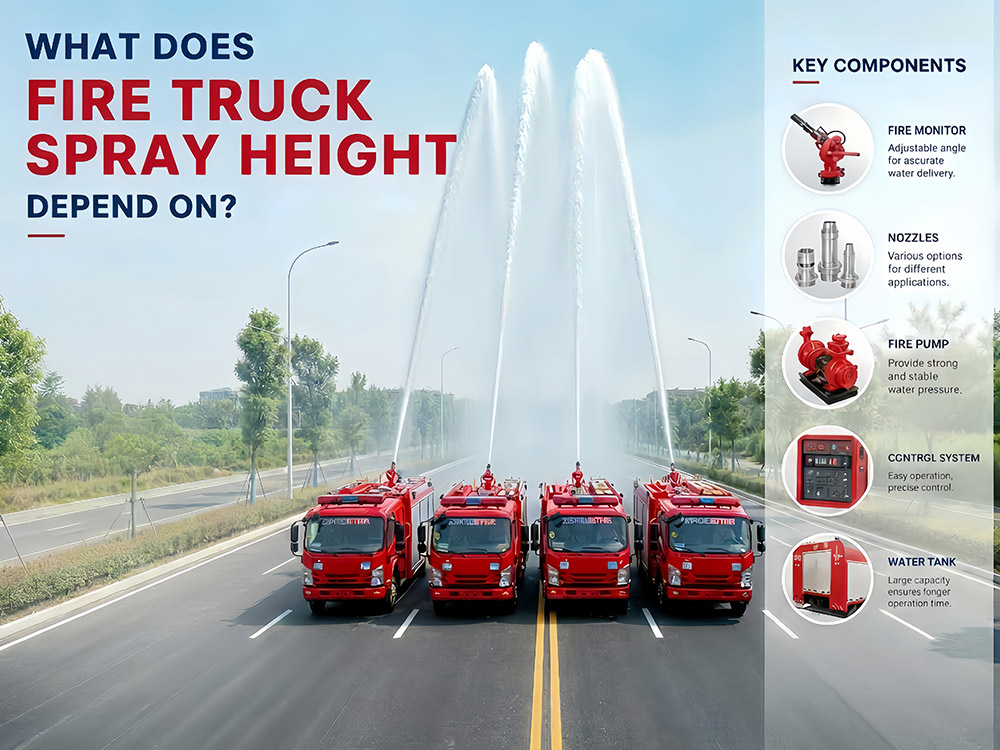
O sistema de bomba e pulverização do caminhão de bombeiros é o núcleo das operações de combate a incêndios. Ele atua como o "braço poderoso" do caminhão de bombeiros. Ao converter a potência do motor em pressão (variando de 0,8 a 1,4 MPa), ele fornece agentes extintores a alturas de até 85 metros — seja um incêndio em um edifício alto em um centro urbano densamente povoado ou um incêndio em um tanque de armazenamento petroquímico em uma zona industrial, o caminhão de bombeiros depende deste sistema para alcançar uma supressão eficaz de incêndios. Quais fatores afetam a altura de pulverização de um caminhão de bombeiros e como a pressão da bomba, a vazão e o monitor de incêndio trabalham juntos? Esses são os pontos de interesse de muitos clientes. Vamos aprender sobre isso hoje. » I. Três componentes principais que determinam a altura de pulverização 1. Sistema de bomba de incêndio: O coração do caminhão de bombeiros. Bomba centrífuga acionada por tomada de força (PTO). Classes comuns de pressão: 0,8 MPa, 1,0 MPa, 1,2 MPa, 1,4 MPa. Vazões de 2.000 a mais de 5.000 L/min. 2. Monitor de incêndio: O componente final antes que o agente extintor saia do caminhão. Disponível em monitor de água, monitor de espuma e monitor de dupla função. A série PL (PL48) com vazão de até 4.000 L/min e altura de pulverização superior a 70 metros. 3. Sistema de distribuição: Tubulações, mangueiras e bicos que transportam o agente extintor da bomba até o monitor. O diâmetro da mangueira, o comprimento e o tipo de bico afetam a altura final de pulverização. » II. Fatores principais que determinam a altura de pulverização 1.1. Pressão da bomba A pressão da bomba do caminhão de bombeiros é a força gerada pela bomba de incêndio para empurrar o agente extintor através das mangueiras e descarregá-lo pelos bicos ou monitores. Ela é o principal fator que determina tanto a vazão quanto a distância de pulverização. Uma pressão maior produz maior velocidade na saída do monitor, aumentando diretamente a altura de pulverização. A relação é definida pela fórmula H ≈ P/(ρg), em que cada aumento de 0,1 MPa adiciona aproximadamente 10 metros de altura teórica — mas perdas reais reduzem esse valor. Nas operações práticas de combate a incêndios, aplicam-se as seguintes faixas: Pressão da bomba Altura típica de pulverização 0,8 MPa 35–45 metros 1,0 MPa 45–55 metros 1,2 MPa 55–70 metros 1,4 MPa 70–85 metros 1.2. Como funciona a bomba de incêndio: A bomba normalmente é uma bomba centrífuga acionada pelo motor do caminhão por meio de uma tomada de força (PTO). À medida que o impulsor gira, ele suga o agente extintor e o lança para fora pela força centrífuga, criando pressão que o impulsiona pelo sistema de descarga. Pressão nominal vs. pressão de operação: Termo Definição Pressão nominal A pressão máxima que a bomba pode manter continuamente sob condições de projeto Pressão de operação A pressão real usada durante o combate a incêndios, normalmente inferior à pressão nominal para permitir uma m...
Detalhes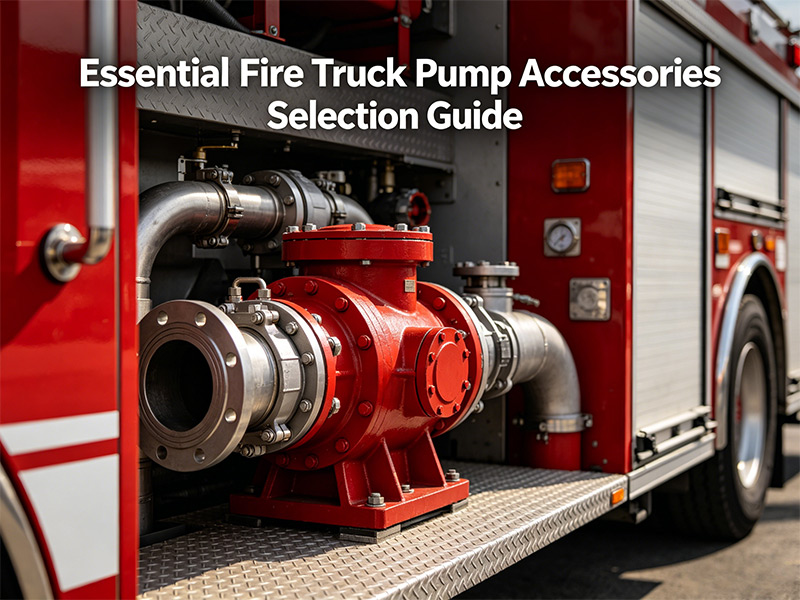
Um sistema de bomba de caminhão de bombeiros é tão confiável quanto seus componentes. Desde a captação de água de uma fonte até sua descarga em alta pressão, cada acessório desempenha um papel fundamental. Este guia aborda caminhão de bombeiros cinco categorias principais de acessórios: escorvadores, válvulas de esfera, válvulas globo, proporcionadores de espuma e sistemas de controle hidráulico. A compreensão desses componentes ajuda os bombeiros a manter seus equipamentos e escolher os acessórios adequados para aplicações específicas. I. Série de Escorvadores (Dispositivos de Escorva a Vácuo) Os escorvadores são essenciais para captar água de lagos, rios ou outras fontes estáticas quando um hidrante não está disponível. Eles removem o ar da bomba e da mangueira de sucção, permitindo que a pressão atmosférica empurre a água para dentro da bomba. Visão geral do produto Produto Vácuo máximo Tensão Potência Tamanho adequado da bomba Escorvador de 2 pistões >85kPa 24V - Abaixo de 100 L/s Escorvador elétrico de 2 pistões >85kPa 24V 2.1KW Abaixo de 100 L/s Escorvador de 4 pistões >85kPa 24V - Acima de 100 L/s Escorvador elétrico de 4 pistões >85kPa 24V 2.1KW Acima de 100 L/s Característica principal: escorvadores elétricos Os escorvadores elétricos oferecem uma vantagem significativa — eles podem escorvar a bomba sem que a bomba esteja girando. Isso protege o selo mecânico contra danos causados pelo funcionamento a seco. Quando um escorvador padrão exige que a bomba gire, a versão elétrica funciona de forma independente, prolongando a vida útil do selo. II. Série de Válvulas de Esfera (Controle de Fluxo) As válvulas de esfera controlam o fluxo de água através de mangueiras e saídas de descarga. Elas são projetadas para operação rápida de abrir/fechar com uma simples rotação de 90°. Válvulas de esfera de aço inoxidável Modelo Material Pressão nominal Rosca Operação FQS65/2.5 Corpo e esfera: aço inoxidável 304; Vedação: PTFE 2,5 MPa G2-1/2" Volante / Alavanca FQS80/2.5 Corpo e esfera: aço inoxidável 304; Vedação: PTFE 2,5 MPa G3" Volante / Alavanca Válvulas de esfera de liga de alumínio (peso mais leve) Modelo Material Pressão nominal Rosca Operação FQS65/2.5 Corpo: A356.2; Esfera: 304; Vedação: PTFE 2.5 MPa G2.5" Volante manual / Alavanca FQS80/1.6 Corpo: A356.2; Esfera: 304; Vedação: PTFE 1.6 MPa G3" Volante manual / Alavanca FQS65/2.5 Quadrado Corpo: A356.2; Esfera: 304; Vedação: PTFE 2.5 MPa - Pneumático / Alavanca Ⅲ. Série de Válvulas Globo (Regulação de Pressão e Fluxo) Ao contrário das válvulas de esfera, que são projetadas para operação de ligar/desligar, as válvulas globo permitem o controle preciso da vazão e da pressão. Elas são ideais para situações em que é necessário um ajuste gradual. Modelo Material Pressão Nominal Rosca Operação DN65/2.5 Corpo: A356.2; Haste: H62; Vedação: NBR 2.5 MPa G2.5" Volante manual DN80/2.5 Corpo: A356.2; Haste: H62; Vedação: NBR 2.5 MPa G3" Volante manual Quando usar uma válvu...
Detalhes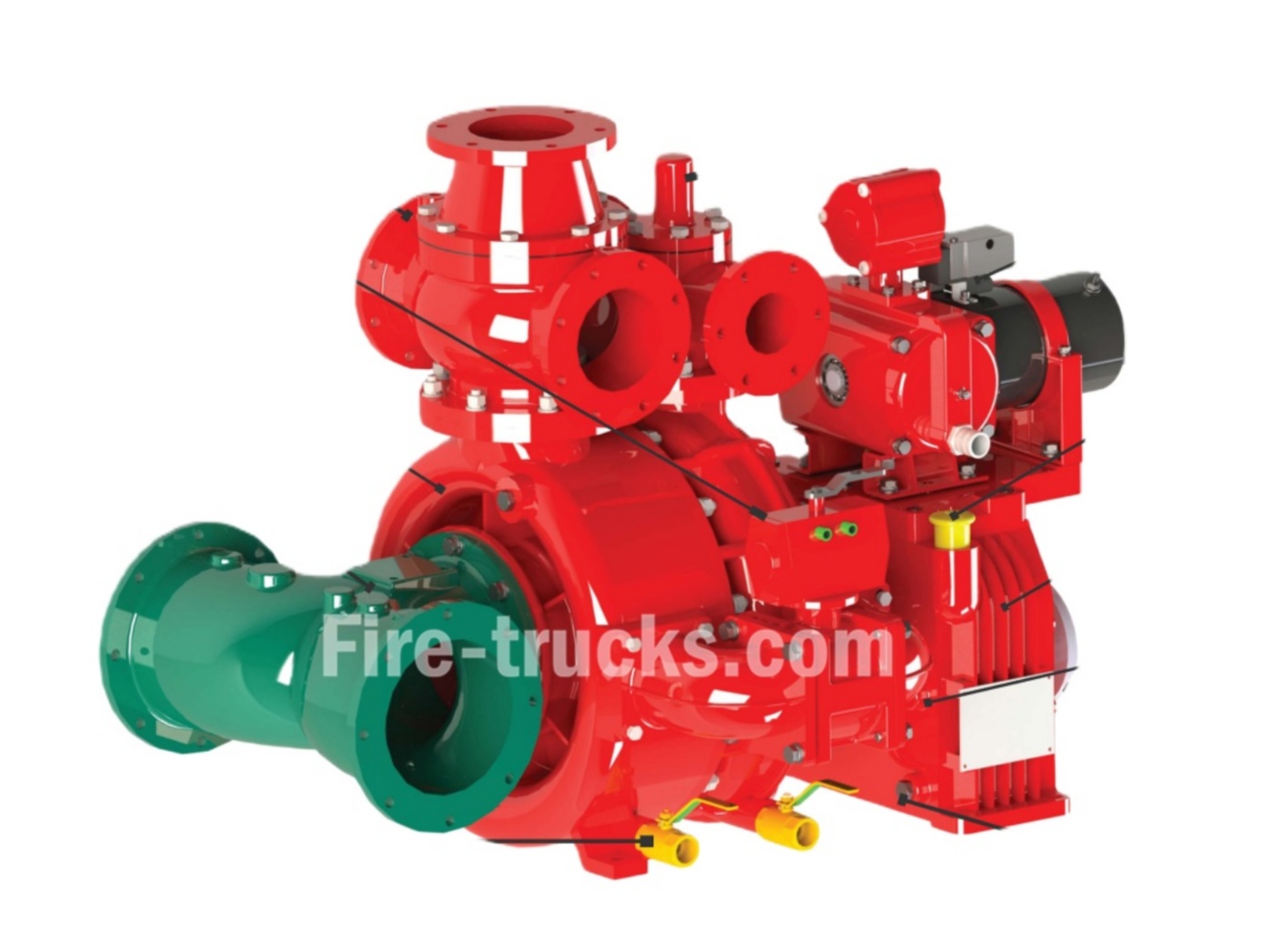
Como profissional xiongzhen fabricante de bombas de incêndio na China, Caminhões Powerstar A empresa possui sua própria marca, a série de produtos "Xiongzhen", que inclui bombas de incêndio de baixa pressão, bombas de incêndio de média-baixa pressão e bombas de incêndio veiculares de alta-baixa pressão, além de equipamentos auxiliares como canhões de água e dosadores de espuma. Suas bombas de incêndio utilizam materiais inovadores, como liga de alumínio e aço inoxidável, e são equipadas com um dispositivo de desengate automático por embreagem eletromagnética e uma válvula de retenção, apresentando excelente desempenho, operação simples e manutenção facilitada. Os produtos da empresa foram aprovados nos testes de tipo realizados pelo Centro Nacional de Supervisão e Inspeção da Qualidade de Equipamentos de Incêndio, possuem certificação CCC e certificação do sistema de gestão da qualidade ISO 9001. As bombas de incêndio Xiongzhen incluem principalmente os seguintes modelos: CB10/20-XZ, CB10/30-XZ , CB10/40-XZ, CB10/60-XZ , CB10/80-XZ, CB10/100-XZ, CB20.10/15.30-XZ, CB20.10/20.40-XZ, CB20.10/30.60-XZ, etc. Bomba de incêndio CB10/20-XZ para caminhões de bombeiros Bombas de incêndio CB10/30-XZ para caminhões de bombeiros Bombas de incêndio Modelo CB10/40-XZ para caminhão de bombeiros China Bombas de incêndio Modelo CB10-60 para caminhões de resgate de bombeiros Bombas de incêndio de emergência CB10/80-XZ para caminhões de bombeiros Bombas de combate a incêndio CB10/100-XZ para veículos de bombeiros Especificações do Sistema de Bomba de Incêndio Xiongzhen CB10/100-XZ Fabricantes de bombas de incêndio da série CB de Xiongzhen Especificações dos conjuntos de bombas de incêndio CB10/150 Sistema de bomba de combate a incêndio CB10/160-XZ fábrica xiongzhen Especificações da Bomba de Incêndio de Emergência CB10/170-XZ A Powerstar Trucks possui sólidas capacidades técnicas, detendo quatro patentes, e utiliza equipamentos de produção avançados, como desenho CAD e máquinas-ferramenta CNC, para garantir altos índices de qualificação de produtos e satisfação do cliente. Seus produtos são voltados principalmente para oficinas de modificação de caminhões de bombeiros e corporações de bombeiros. Especificações detalhadas da bomba de incêndio CB20.10 20.40 Bomba de incêndio CB20.10 30.60-XZ da fábrica Xiongzhen Bomba de incêndio série CB20/15-XZ Bomba de incêndio de emergência série CB20/20-XZ Detalhes da Instalação da Bomba de Incêndio CB20 25 Aqui está um cronograma de manutenção para o seu XIONGZHEN. bombas de incêndio , categorizados por semana, mês, trimestre e ano para facilitar a consulta: 01, Inspeção diária da bomba de incêndio Powersar: Verifique a pressão e a frequência de partida e parada da bomba estabilizadora de pressão. Verifique a potência da bateria de arranque da bomba de incêndio com motor a diesel. Verifique se há danos nas válvulas de controle da fonte de água e nos conjuntos das válvulas de alarme. 02, Bomba de incêndio Powersar Inspeção semana...
Detalhes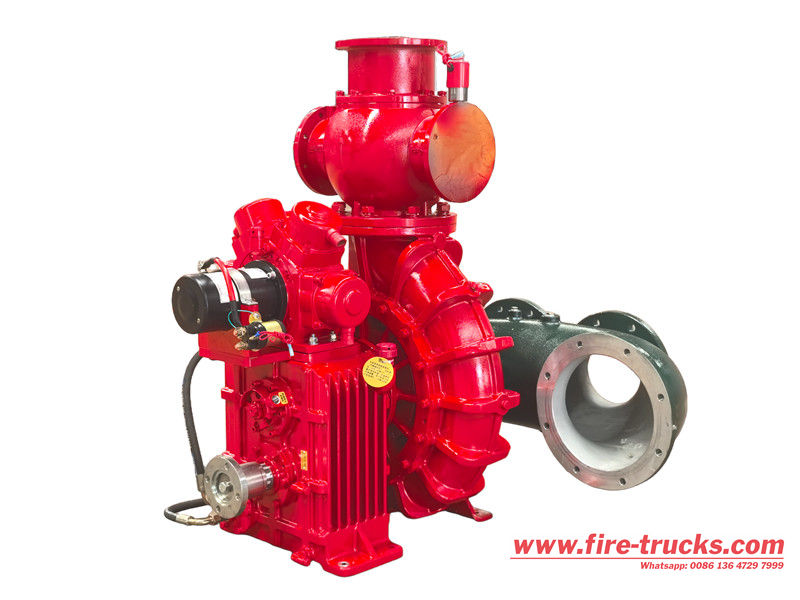
A bomba de espuma para combate a incêndio CB10/140 é um sistema de abastecimento de água para incêndio comumente utilizado, tanto em veículos quanto em instalações fixas, com pressão nominal de 1,0 MPa e vazão nominal de 140 L/s, atendendo às necessidades básicas de abastecimento de água em sistemas de combate a incêndio. O corpo e o rotor da bomba são fabricados com materiais de alta qualidade e resistentes ao desgaste, oferecendo resistência à corrosão e à alta pressão. Possui um design de entrada dupla para troca rápida da fonte de água e é acionado por um motor de alta eficiência ou motor a diesel, atingindo um tempo de resposta de inicialização de 30 segundos ou menos. Com seu design compacto, fácil manutenção e operação confiável, o Bomba de espuma para combate a incêndio CB10/140 É um equipamento vital para garantir o abastecimento eficiente de água em operações de combate a incêndios. A bomba de incêndio de baixa pressão CB10/140-XZ, montada em caminhão, possui uma estrutura centrífuga de estágio único com carcaça em liga de alumínio e rotor de latão. Utiliza um sistema de escorva elétrica com quatro pistões e acionamento elétrico. A bomba de espuma opcional CB10/20 utiliza um mecanismo de separação pneumática. Este produto oferece excelente desempenho, estrutura compacta, operação simples e fácil manutenção. A bomba de incêndio CB10/140-XZ é uma bomba de água centrífuga de estágio único usada em caminhões de bombeiros, caracterizada por seu dispositivo de escorva de dois pistões que engata e desengata automaticamente. Ela foi projetada para alto desempenho com uma estrutura compacta, operação fácil e manutenção conveniente. As principais especificações incluem uma vazão de 140 L/s e uma pressão de saída de 1,0 MPa a uma velocidade nominal de 2600 rpm. » . Princípio de funcionamento da bomba de espuma para combate a incêndios CB10/140 ● Ingestão de água e concentrado de espuma: A água é retirada de um reservatório e o concentrado de espuma é retirado do tanque de armazenamento. ● Proporção: O dosador mistura o concentrado de espuma com a água numa proporção predeterminada. ● Pressurização: A bomba pressuriza a mistura, aumentando sua velocidade e pressão. ● Descarga: A solução de espuma pressurizada é impulsionada através da mangueira de descarga até o bocal, onde é lançada sobre o fogo. ● Supressão de incêndios: A espuma envolve a fonte de combustível, separando-a do oxigênio e extinguindo o fogo. » . Apresentação detalhada da bomba de espuma para combate a incêndios CB10/140 1. Projeto estrutural superior, desempenho estável e confiável: ● O Bomba de incêndio CB10/140 Apresenta um design centrífugo de estágio único e é construído em liga de alumínio de alta resistência, oferecendo vantagens como leveza, resistência à corrosão e resistência a altas temperaturas. ● A estrutura interna da bomba é usinada com precisão, garantindo um fluxo suave e excelente desempenho hidráulico. Uma vedação mecânica impede vazamentos e assegura confiabilida...
Detalhes
Por favor, continue lendo, fique por dentro, inscreva-se e nós o convidamos a nos dizer o que você pensa.

 Rede IPv6 suportada

 português
 English
 français
 Deutsch
 русский
 italiano
 español
 Nederlands
 العربية
 日本語
日本語 한국의
한국의 Türkçe
 Melayu
 ไทย
ไทย Tiếng Việt
 Indonesia
  中文
中文 қазақ
қазақ Filipino
 မြန်မာ
 српски