Deixe uma Mensagem
Se estiver interessado nos nossos produtos e quiser saber mais detalhes, deixe uma mensagem aqui. Responderemos o mais breve possível.

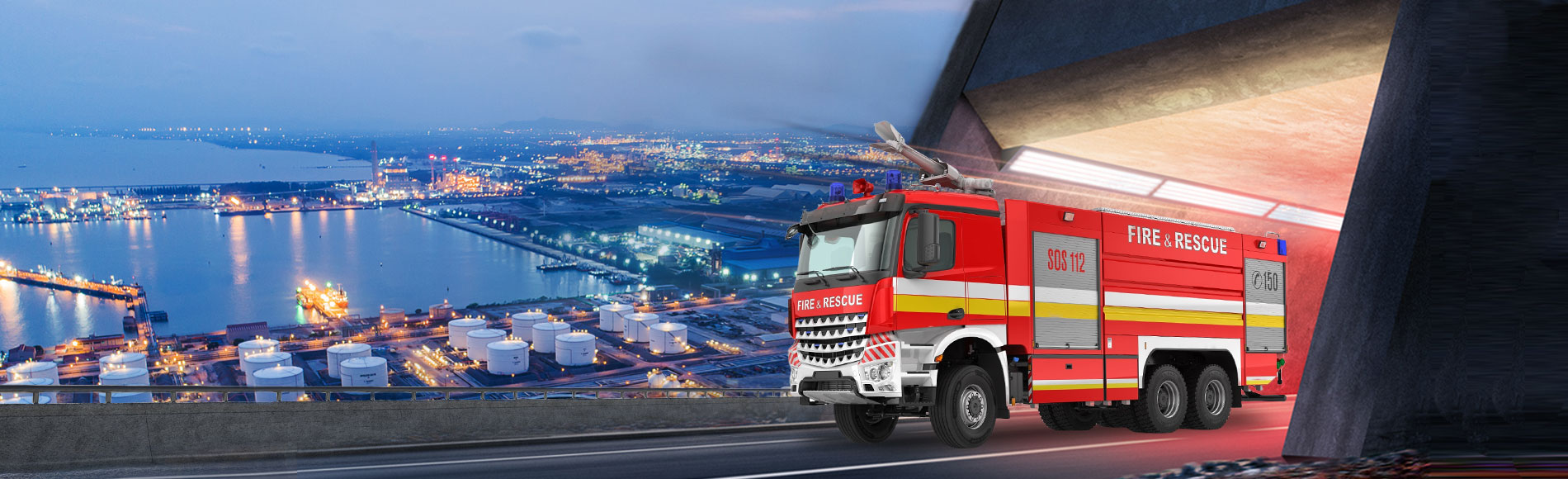
Do que depende a altura de pulverização de um caminhão de combate a incêndio?
O sistema de bomba e pulverização do caminhão de bombeiros é o núcleo das operações de combate a incêndios. Ele atua como o "braço poderoso" do caminhão de bombeiros. Ao converter a potência do motor em pressão (variando de 0,8 a 1,4 MPa), ele fornece agentes extintores a alturas de até 85 metros — seja um incêndio em um edifício alto em um centro urbano densamente povoado ou um incêndio em um tanque de armazenamento petroquímico em uma zona industrial, o caminhão de bombeiros depende deste sistema para alcançar uma supressão eficaz de incêndios.
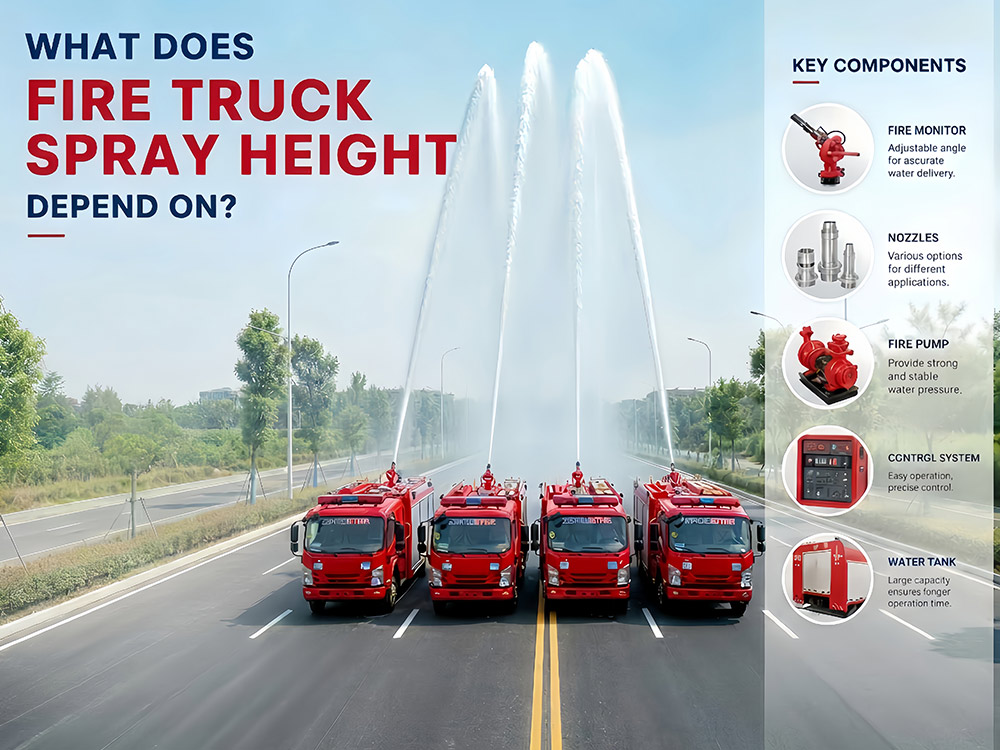
Quais fatores afetam a altura de pulverização de um caminhão de bombeiros e como a pressão da bomba, a vazão e o monitor de incêndio trabalham juntos? Esses são os pontos de interesse de muitos clientes. Vamos aprender sobre isso hoje.
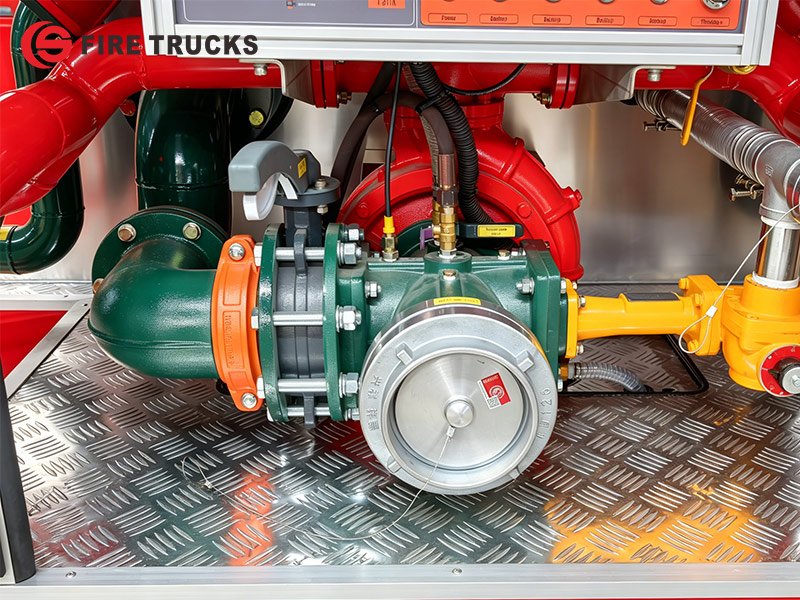
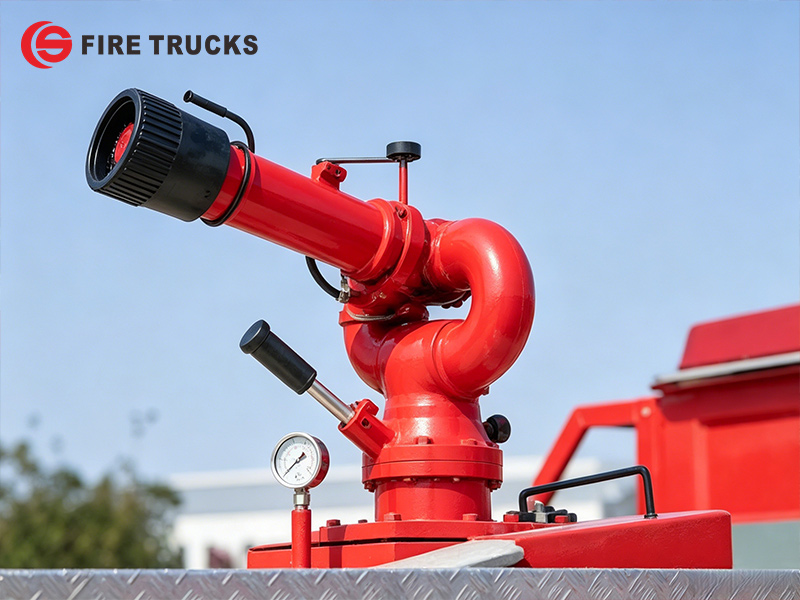
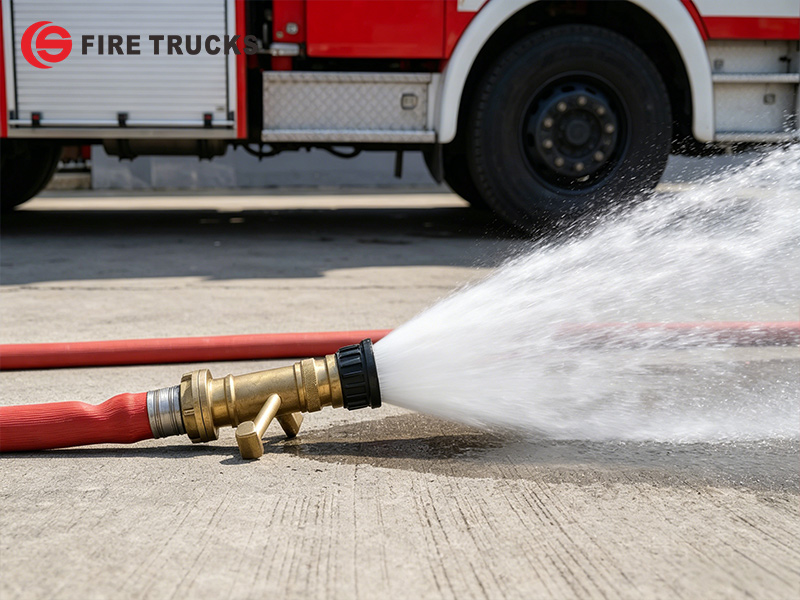
A pressão da bomba do caminhão de bombeiros é a força gerada pela bomba de incêndio para empurrar o agente extintor através das mangueiras e descarregá-lo pelos bicos ou monitores. Ela é o principal fator que determina tanto a vazão quanto a distância de pulverização. Uma pressão maior produz maior velocidade na saída do monitor, aumentando diretamente a altura de pulverização. A relação é definida pela fórmula H ≈ P/(ρg), em que cada aumento de 0,1 MPa adiciona aproximadamente 10 metros de altura teórica — mas perdas reais reduzem esse valor.
Nas operações práticas de combate a incêndios, aplicam-se as seguintes faixas:
| Pressão da bomba | Altura típica de pulverização |
| 0,8 MPa | 35–45 metros |
| 1,0 MPa | 45–55 metros |
| 1,2 MPa | 55–70 metros |
| 1,4 MPa | 70–85 metros |
A bomba normalmente é uma bomba centrífuga acionada pelo motor do caminhão por meio de uma tomada de força (PTO). À medida que o impulsor gira, ele suga o agente extintor e o lança para fora pela força centrífuga, criando pressão que o impulsiona pelo sistema de descarga.
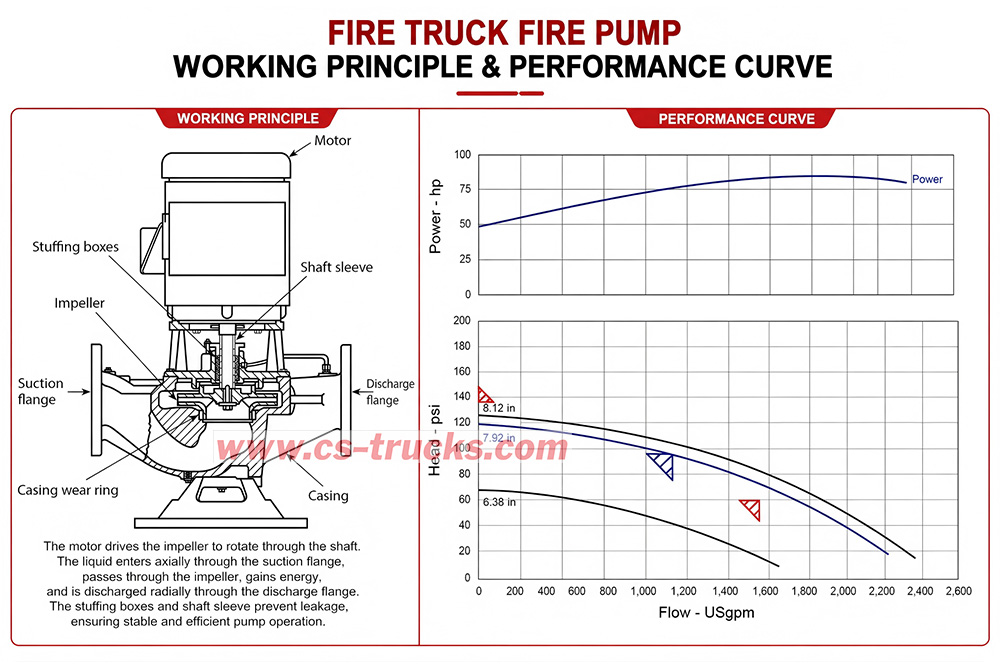 Pressão nominal vs. pressão de operação:
| Termo | Definição |
| Pressão nominal | A pressão máxima que a bomba pode manter continuamente sob condições de projeto |
| Pressão de operação | A pressão real usada durante o combate a incêndios, normalmente inferior à pressão nominal para permitir uma margem de segurança |
Uma vazão adequada é tão importante quanto a pressão. Uma pressão alta com baixa vazão não consegue fornecer agente extintor suficiente para controlar um incêndio. O sistema da bomba deve manter pressão e vazão simultaneamente.
Relação entre vazão e altura de pulverização:
2.000 L/min → eficaz para incêndios municipais
3.000 L/min → adequado para parques industriais
4.000 L/min → necessário para instalações petroquímicas
5.000+ L/min → necessário para resgate em acidentes aeroportuários
O caminho interno do fluxo, o diâmetro da saída e o tipo do monitor afetam diretamente a altura do jato.
Comparação dos tipos de monitor:
Monitor de água: maior altura, caminho de fluxo reto
Monitor de espuma: ligeiramente menor (5–10% menos) devido à turbulência da entrada de ar
Monitor de dupla finalidade: moderado (compromisso entre água e espuma)
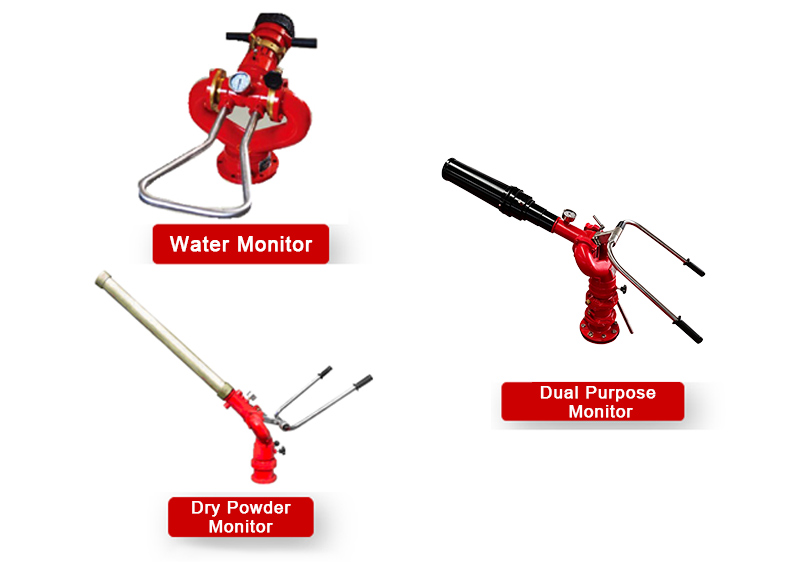
Água e espuma têm densidades diferentes. A solução de espuma é aproximadamente 5-10% mais densa que a água, o que reduz ligeiramente a altura do jato na mesma pressão. Isso deve ser considerado ao selecionar equipamentos para operações com espuma.
À medida que o agente extintor flui por mangueiras e tubulações, o atrito reduz a pressão no monitor. Mangueiras mais longas e diâmetros menores aumentam as perdas.
Fatores de perda por atrito:
Comprimento da mangueira: mais longo = mais perda
Diâmetro da mangueira: menor = mais perda
Conexões e curvas: cada uma adiciona resistência
Para fornecer aos clientes as melhores soluções de combate a incêndio, FIRE TRUCKS seleciona o sistema mais adequado com base nos requisitos da aplicação
de aplicação: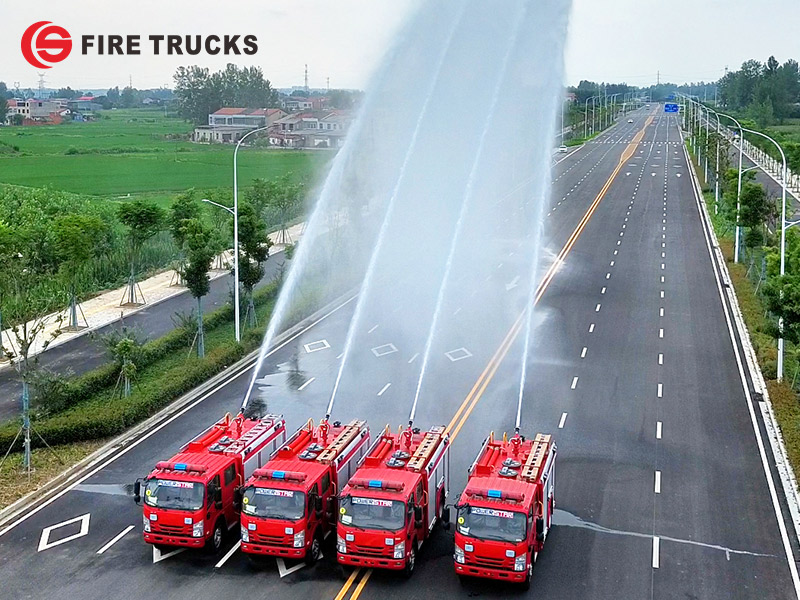
| Pressão da bomba | Taxa de fluxo | Altura do jato | Aplicação recomendada |
| 0,8 MPa | 2.000 L/min | 35–45 m | Combate a incêndios municipais |
| 1,0 MPa | 3.000 L/min | 45–55 m | Parques industriais |
| 1,2 MPa | 4.000 L/min | 55–70 m | Instalações petroquímicas |
| 1,4 MPa | 5.000+ L/min | 70–85 m | Combate a incêndios em aeroportos |
| Aplicação | Tipo de monitor recomendado | Motivo |
| Combate a incêndios municipal | Monitor de água | Maior altura de pulverização, operação simples |
| Refinaria de petróleo/fábrica química | Monitor de espuma ou de dupla finalidade | Lida com incêndios de líquidos inflamáveis |
| Resgate em acidentes de aeronaves em aeroportos | Monitor de espuma (alta capacidade) | Grande volume de espuma necessário |
| Riscos de incêndio mistos | Monitor de dupla finalidade | Flexibilidade para água e espuma |
| Fator | Impacto | Como otimizar |
| Pressão da bomba | Diretamente proporcional | Selecionar a pressão adequada para a aplicação |
| Vazão | Mantém a supressão de incêndios | Equilibrar a pressão com a vazão |
| Projeto do monitor | Variação de até 10% | Combinar o tipo de monitor com a aplicação |
| Tipo de agente | A espuma reduz ligeiramente a altura | Considerar a diferença de densidade |
| Perda por atrito | Reduz a pressão efetiva | Usar mangueiras mais curtas/maiores |
| Ganho de elevação | Consome pressão | Adicionar pressão para a altura |
| Velocidade do vento | Reduz a altura efetiva | Posicione o caminhão contra o vento |
Contexto do caso:
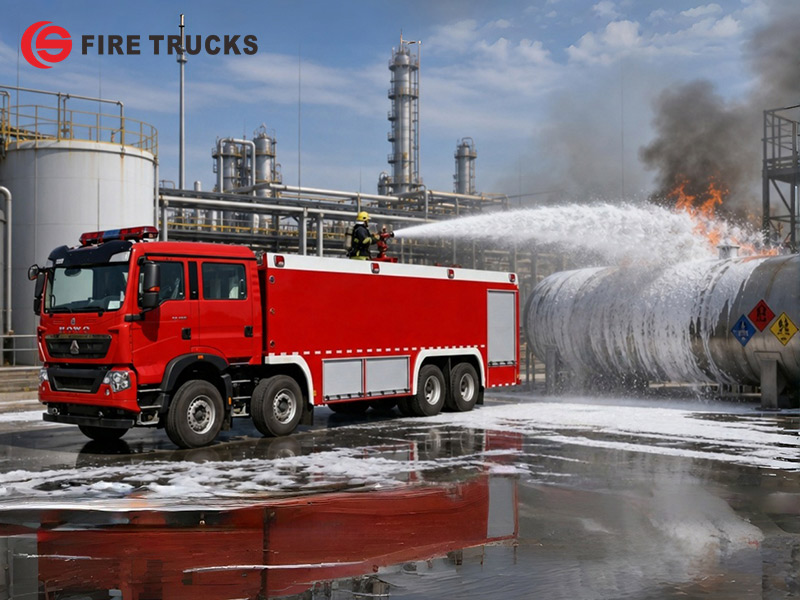
Um incêndio de grande escala ocorreu em uma instalação de armazenamento petroquímico em uma zona industrial. O incêndio envolveu um tanque de teto flutuante com 50 metros de diâmetro contendo petróleo bruto. Mangueiras instaladas no solo não conseguiam alcançar o incêndio devido à altura do tanque e à zona de calor radiante.
Configuração do caminhão de combate a incêndio:
Caminhão de combate a incêndio com espuma 8×4
Sistema de bomba com capacidade nominal de 1,2 MPa / 4.000 L/min
Canhão monitor de uso duplo de espuma/água PL48
Desempenho real:
Altura de pulverização medida: aproximadamente 62 metros
Cobertura efetiva: área do tanque com aproximadamente 80 metros de diâmetro
A camada de espuma suprimiu o incêndio com sucesso em 8 minutos
Lição principal:
Para incêndios em grandes tanques de armazenamento, pressões abaixo de 1,0 MPa são frequentemente insuficientes para lançar espuma até a distância necessária. A combinação de pressão adequada, alta vazão e um monitor selecionado corretamente é essencial para uma supressão eficaz de incêndios.
Equívoco 1: Maior pressão é sempre melhor
Realidade:Maior pressão aumenta o consumo de energia, o custo dos equipamentos e a complexidade da manutenção. Pressão excessiva também pode danificar mangueiras e esguichos. O objetivo é obter pressão adequada para o trabalho, não pressão máxima.
Equívoco 2: Altura do jato é igual à capacidade de combate a incêndio
Realidade:A vazão geralmente é mais crítica do que a altura. Um jato alto com baixa vazão pode não fornecer agente extintor suficiente para suprimir um incêndio. O que importa é o valor combinado de pressão e vazão.
Equívoco 3: A perda por atrito pode ser ignorada
Realidade:Em longas extensões de mangueiras, a perda por atrito pode consumir 20-30% da pressão da bomba. O cálculo adequado da perda por atrito é essencial para garantir pressão suficiente no esguicho.
Equívoco 4: O monitor não faz diferença
Realidade:Uma bomba de alta pressão conectada a um monitor mal projetado não alcançará a altura máxima de pulverização. O caminho interno do fluxo, o diâmetro da saída e o tipo de monitor afetam o desempenho final. Combinar o monitor com a bomba é tão importante quanto selecionar a própria bomba.
P: Qual é a pressão de bomba mais comum em caminhões de combate a incêndio?
R: A maioria dos caminhões de combate a incêndio é projetada com pressões de bomba variando de 0,8 a 1,2 MPa, sendo 1,0 MPa o padrão mais comum.
P: Quão alto uma bomba de 1,0 MPa pode pulverizar?
R: Em condições padrão, uma bomba de 1,0 MPa pode alcançar alturas de pulverização de 45 a 55 metros usando um monitor médio a grande.
P: Por que incêndios em prédios altos exigem maior pressão da bomba?
R: Incêndios em prédios altos exigem pressão adicional para superar o ganho de elevação (1,0 m de altura requer aproximadamente 0,01 MPa) e a perda por atrito em linhas verticais de mangueiras.
P: Um monitor de espuma alcança a mesma altura de pulverização que um monitor de água?
A: Normalmente, os monitores de espuma atingem alturas ligeiramente menores (5–10% menos) do que os monitores de água com a mesma pressão, devido ao projeto de entrada de ar que cria turbulência e à maior densidade da solução de espuma.
P: Qual é o fator mais importante para a altura do jato?
R: Nenhum fator isolado determina a altura do jato. A pressão da bomba, a vazão, o projeto do monitor, o tipo de bocal e as condições ambientais atuam em conjunto. Um sistema bem equilibrado é mais eficaz do que um que se destaca em apenas uma área.
P: O próprio monitor afeta a altura do jato?
R: Sim. O caminho interno do fluxo do monitor, o diâmetro da saída e o tipo (água, espuma ou dupla finalidade) afetam diretamente a altura do jato. Um monitor bem projetado maximiza a energia fornecida pela bomba.
A altura do jato depende de múltiplos fatores — pressão da bomba, vazão, projeto do monitor, tipo de agente, perda por atrito, elevação e condições do vento
1,0–1,2 MPa é a faixa de pressão predominante para a maioria das aplicações industriais de combate a incêndio
A seleção do monitor é importante — uma bomba de alta pressão com um monitor mal projetado não atingirá a altura máxima do jato
A vazão é tão importante quanto a pressão — alta pressão com baixa vazão pode não fornecer agente extintor suficiente para suprimir um incêndio
Diferentes agentes possuem diferentes características de jato — a espuma é mais densa e atinge uma altura ligeiramente menor
Projetos petroquímicos e aeroportuários normalmente exigem 1,2 MPa ou mais
Para projetos internacionais, priorize caminhões de combate a incêndio que atendam a normas reconhecidas como NFPA, EN ou GB
A altura do jato de um caminhão de combate a incêndio não é determinada por um único fator. Ela depende do efeito combinado da pressão da bomba, vazão, projeto do monitor, tipo de agente, perda por atrito, ganho de elevação e condições do vento.


Você pode estar interessado nas seguintes informações
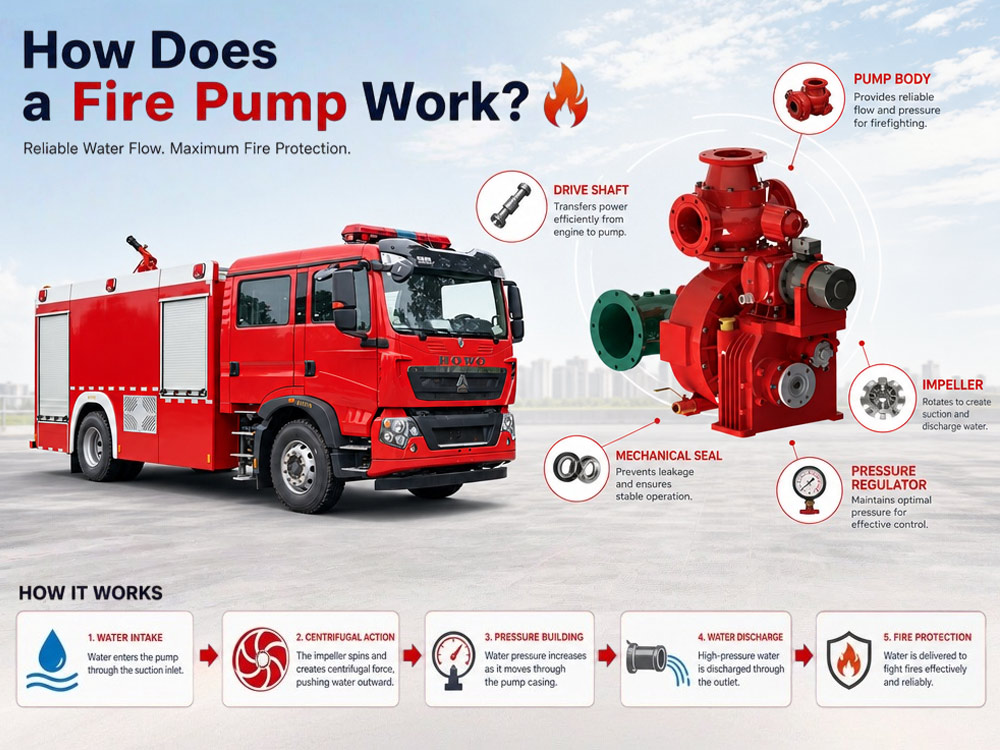
Uma bomba de incêndio é o coração do sistema de fornecimento de água de todo caminhão de bombeiros. Seja ao responder a um incêndio estrutural, emergência industrial, incidente em aeroporto ou operação em área de vegetação, a bomba de incêndioem um caminhão de bombeiros é responsável por fornecer água de alta pressão para mangueiras, monitores de incêndio e sistemas de espuma.Seu design de impulsor centrífugo e sistema acionado por PTO garantem pressão estável e altas taxas de fluxo, aumentando diretamente a eficácia do combate a incêndios em mais de 40%, enquanto reduzem o tempo de resposta em 3 vezes. Ela pode ser chamada de guardiã invisível das operações de combate a incêndios e a base técnica da resposta moderna a emergências. Aprenda como uma bomba de incêndio funciona, incluindo seu princípio de funcionamento, principais componentes, processo de fluxo de água, geração de pressão e aplicações. Descubra como as bombas de caminhões de bombeiros fornecem abastecimento confiável de água para combate a incêndios e como escolher a bomba certa para seu veículo de combate a incêndio.Vamos aprender sobre isso hoje. » I. Primeiro, precisamos conhecer os três componentes principais do sistema de bomba de incêndio: 1. Impulsor: O componente rotativo que puxa a água e a lança para fora pela força centrífuga. Normalmente feito de bronze, aço inoxidável ou ferro fundido. 2. Carcaça da bomba: O compartimento que contém o impulsor e direciona o fluxo de água. Projetado para converter velocidade em pressão. 3. Tomada de força (PTO): A conexão mecânica que transfere a potência do motor da transmissão do caminhão para a bomba de incêndio. » II. Após conhecer os componentes principais, o princípio central de funcionamento da bomba de incêndio é o seguinte: 1. A potência é transferida do motor através da PTO O motor do caminhão aciona a PTO, que se conecta ao eixo da bomba. Quando o operador aciona a PTO, a potência do motor é redirecionada para girar o impulsor da bomba em alta velocidade. 2. O impulsor começa a girar O impulsor gira a 1.500–2.500 RPM, puxando água para dentro da bomba pela entrada de sucção. As pás giratórias do impulsor criam uma zona de baixa pressão no centro, puxando água do tanque embarcado, hidrante ou fonte natural de água. 3. A força centrífuga aumenta a pressão da água À medida que o impulsor gira, ele lança a água para fora pela força centrífuga. A velocidade da água aumenta conforme ela se move do centro para a borda externa do impulsor. A carcaça da bomba então converte essa velocidade em pressão, forçando a saída de água de alta pressão pela saída de descarga. 4. A água de alta pressão sai pela saída de descarga A água pressurizada (normalmente 0,8–1,2 MPa) sai pela saída de descarga e é fornecida para mangueiras de incêndio, monitores de incêndio ou sistemas de proporção de espuma para operações de combate a incêndios. » III. De onde a bomba de incêndio obtém água? A bomba de incêndio pode captar água de três fontes: Tanque de ág...
Detalhes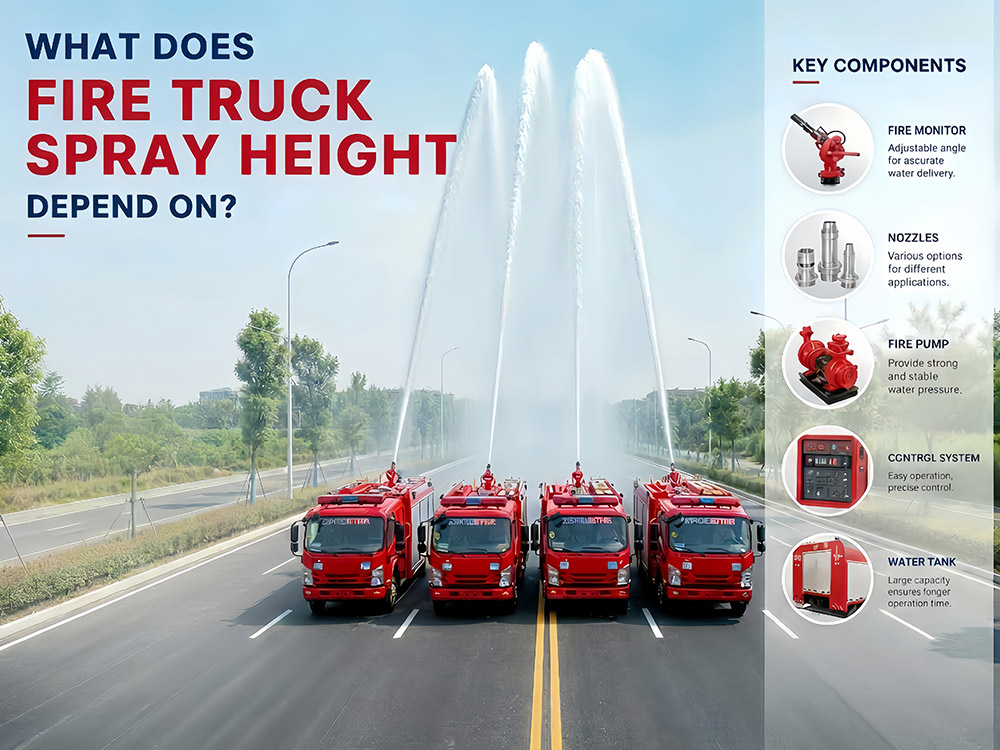
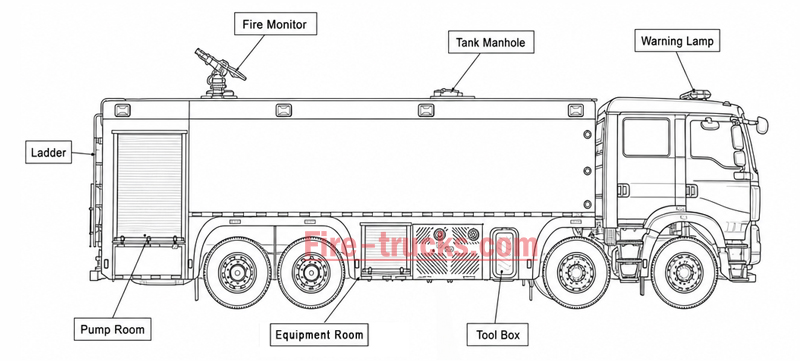
O sistema de bomba e pulverização do caminhão de bombeiros é o núcleo das operações de combate a incêndios. Ele atua como o "braço poderoso" do caminhão de bombeiros. Ao converter a potência do motor em pressão (variando de 0,8 a 1,4 MPa), ele fornece agentes extintores a alturas de até 85 metros — seja um incêndio em um edifício alto em um centro urbano densamente povoado ou um incêndio em um tanque de armazenamento petroquímico em uma zona industrial, o caminhão de bombeiros depende deste sistema para alcançar uma supressão eficaz de incêndios. Quais fatores afetam a altura de pulverização de um caminhão de bombeiros e como a pressão da bomba, a vazão e o monitor de incêndio trabalham juntos? Esses são os pontos de interesse de muitos clientes. Vamos aprender sobre isso hoje. » I. Três componentes principais que determinam a altura de pulverização 1. Sistema de bomba de incêndio: O coração do caminhão de bombeiros. Bomba centrífuga acionada por tomada de força (PTO). Classes comuns de pressão: 0,8 MPa, 1,0 MPa, 1,2 MPa, 1,4 MPa. Vazões de 2.000 a mais de 5.000 L/min. 2. Monitor de incêndio: O componente final antes que o agente extintor saia do caminhão. Disponível em monitor de água, monitor de espuma e monitor de dupla função. A série PL (PL48) com vazão de até 4.000 L/min e altura de pulverização superior a 70 metros. 3. Sistema de distribuição: Tubulações, mangueiras e bicos que transportam o agente extintor da bomba até o monitor. O diâmetro da mangueira, o comprimento e o tipo de bico afetam a altura final de pulverização. » II. Fatores principais que determinam a altura de pulverização 1.1. Pressão da bomba A pressão da bomba do caminhão de bombeiros é a força gerada pela bomba de incêndio para empurrar o agente extintor através das mangueiras e descarregá-lo pelos bicos ou monitores. Ela é o principal fator que determina tanto a vazão quanto a distância de pulverização. Uma pressão maior produz maior velocidade na saída do monitor, aumentando diretamente a altura de pulverização. A relação é definida pela fórmula H ≈ P/(ρg), em que cada aumento de 0,1 MPa adiciona aproximadamente 10 metros de altura teórica — mas perdas reais reduzem esse valor. Nas operações práticas de combate a incêndios, aplicam-se as seguintes faixas: Pressão da bomba Altura típica de pulverização 0,8 MPa 35–45 metros 1,0 MPa 45–55 metros 1,2 MPa 55–70 metros 1,4 MPa 70–85 metros 1.2. Como funciona a bomba de incêndio: A bomba normalmente é uma bomba centrífuga acionada pelo motor do caminhão por meio de uma tomada de força (PTO). À medida que o impulsor gira, ele suga o agente extintor e o lança para fora pela força centrífuga, criando pressão que o impulsiona pelo sistema de descarga. Pressão nominal vs. pressão de operação: Termo Definição Pressão nominal A pressão máxima que a bomba pode manter continuamente sob condições de projeto Pressão de operação A pressão real usada durante o combate a incêndios, normalmente inferior à pressão nominal para permitir uma m...
Detalhes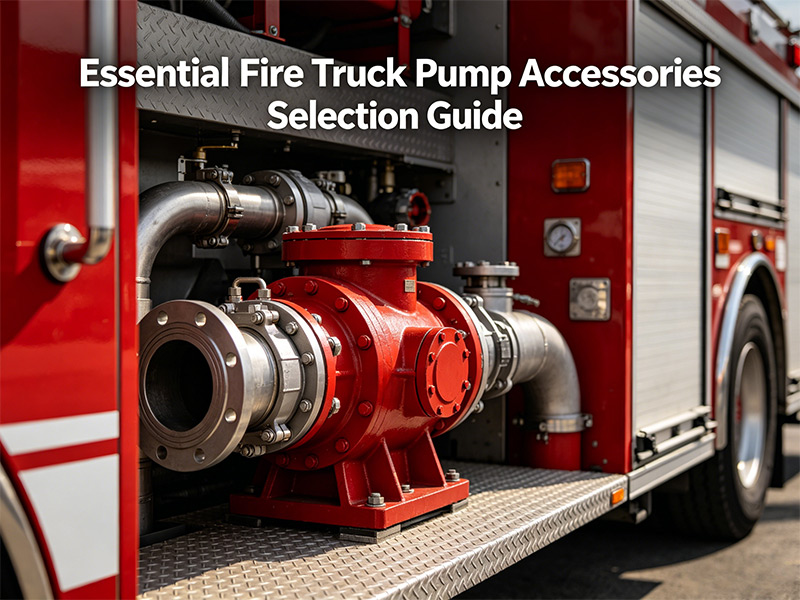
Um sistema de bomba de caminhão de bombeiros é tão confiável quanto seus componentes. Desde a captação de água de uma fonte até sua descarga em alta pressão, cada acessório desempenha um papel fundamental. Este guia aborda caminhão de bombeiros cinco categorias principais de acessórios: escorvadores, válvulas de esfera, válvulas globo, proporcionadores de espuma e sistemas de controle hidráulico. A compreensão desses componentes ajuda os bombeiros a manter seus equipamentos e escolher os acessórios adequados para aplicações específicas. I. Série de Escorvadores (Dispositivos de Escorva a Vácuo) Os escorvadores são essenciais para captar água de lagos, rios ou outras fontes estáticas quando um hidrante não está disponível. Eles removem o ar da bomba e da mangueira de sucção, permitindo que a pressão atmosférica empurre a água para dentro da bomba. Visão geral do produto Produto Vácuo máximo Tensão Potência Tamanho adequado da bomba Escorvador de 2 pistões >85kPa 24V - Abaixo de 100 L/s Escorvador elétrico de 2 pistões >85kPa 24V 2.1KW Abaixo de 100 L/s Escorvador de 4 pistões >85kPa 24V - Acima de 100 L/s Escorvador elétrico de 4 pistões >85kPa 24V 2.1KW Acima de 100 L/s Característica principal: escorvadores elétricos Os escorvadores elétricos oferecem uma vantagem significativa — eles podem escorvar a bomba sem que a bomba esteja girando. Isso protege o selo mecânico contra danos causados pelo funcionamento a seco. Quando um escorvador padrão exige que a bomba gire, a versão elétrica funciona de forma independente, prolongando a vida útil do selo. II. Série de Válvulas de Esfera (Controle de Fluxo) As válvulas de esfera controlam o fluxo de água através de mangueiras e saídas de descarga. Elas são projetadas para operação rápida de abrir/fechar com uma simples rotação de 90°. Válvulas de esfera de aço inoxidável Modelo Material Pressão nominal Rosca Operação FQS65/2.5 Corpo e esfera: aço inoxidável 304; Vedação: PTFE 2,5 MPa G2-1/2" Volante / Alavanca FQS80/2.5 Corpo e esfera: aço inoxidável 304; Vedação: PTFE 2,5 MPa G3" Volante / Alavanca Válvulas de esfera de liga de alumínio (peso mais leve) Modelo Material Pressão nominal Rosca Operação FQS65/2.5 Corpo: A356.2; Esfera: 304; Vedação: PTFE 2.5 MPa G2.5" Volante manual / Alavanca FQS80/1.6 Corpo: A356.2; Esfera: 304; Vedação: PTFE 1.6 MPa G3" Volante manual / Alavanca FQS65/2.5 Quadrado Corpo: A356.2; Esfera: 304; Vedação: PTFE 2.5 MPa - Pneumático / Alavanca Ⅲ. Série de Válvulas Globo (Regulação de Pressão e Fluxo) Ao contrário das válvulas de esfera, que são projetadas para operação de ligar/desligar, as válvulas globo permitem o controle preciso da vazão e da pressão. Elas são ideais para situações em que é necessário um ajuste gradual. Modelo Material Pressão Nominal Rosca Operação DN65/2.5 Corpo: A356.2; Haste: H62; Vedação: NBR 2.5 MPa G2.5" Volante manual DN80/2.5 Corpo: A356.2; Haste: H62; Vedação: NBR 2.5 MPa G3" Volante manual Quando usar uma válvu...
Detalhes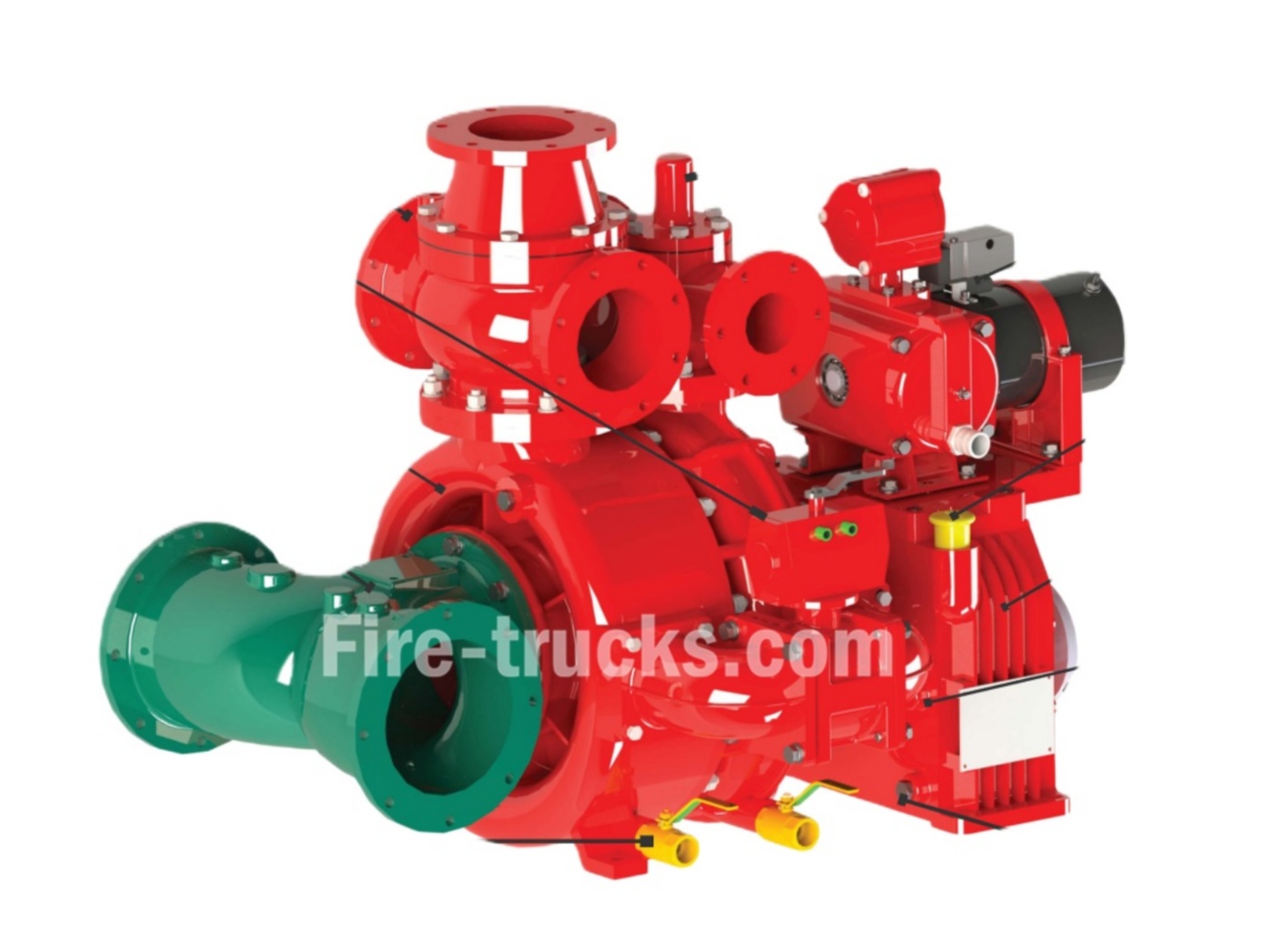
Como profissional xiongzhen fabricante de bombas de incêndio na China, Caminhões Powerstar A empresa possui sua própria marca, a série de produtos "Xiongzhen", que inclui bombas de incêndio de baixa pressão, bombas de incêndio de média-baixa pressão e bombas de incêndio veiculares de alta-baixa pressão, além de equipamentos auxiliares como canhões de água e dosadores de espuma. Suas bombas de incêndio utilizam materiais inovadores, como liga de alumínio e aço inoxidável, e são equipadas com um dispositivo de desengate automático por embreagem eletromagnética e uma válvula de retenção, apresentando excelente desempenho, operação simples e manutenção facilitada. Os produtos da empresa foram aprovados nos testes de tipo realizados pelo Centro Nacional de Supervisão e Inspeção da Qualidade de Equipamentos de Incêndio, possuem certificação CCC e certificação do sistema de gestão da qualidade ISO 9001. As bombas de incêndio Xiongzhen incluem principalmente os seguintes modelos: CB10/20-XZ, CB10/30-XZ , CB10/40-XZ, CB10/60-XZ , CB10/80-XZ, CB10/100-XZ, CB20.10/15.30-XZ, CB20.10/20.40-XZ, CB20.10/30.60-XZ, etc. Bomba de incêndio CB10/20-XZ para caminhões de bombeiros Bombas de incêndio CB10/30-XZ para caminhões de bombeiros Bombas de incêndio Modelo CB10/40-XZ para caminhão de bombeiros China Bombas de incêndio Modelo CB10-60 para caminhões de resgate de bombeiros Bombas de incêndio de emergência CB10/80-XZ para caminhões de bombeiros Bombas de combate a incêndio CB10/100-XZ para veículos de bombeiros Especificações do Sistema de Bomba de Incêndio Xiongzhen CB10/100-XZ Fabricantes de bombas de incêndio da série CB de Xiongzhen Especificações dos conjuntos de bombas de incêndio CB10/150 Sistema de bomba de combate a incêndio CB10/160-XZ fábrica xiongzhen Especificações da Bomba de Incêndio de Emergência CB10/170-XZ A Powerstar Trucks possui sólidas capacidades técnicas, detendo quatro patentes, e utiliza equipamentos de produção avançados, como desenho CAD e máquinas-ferramenta CNC, para garantir altos índices de qualificação de produtos e satisfação do cliente. Seus produtos são voltados principalmente para oficinas de modificação de caminhões de bombeiros e corporações de bombeiros. Especificações detalhadas da bomba de incêndio CB20.10 20.40 Bomba de incêndio CB20.10 30.60-XZ da fábrica Xiongzhen Bomba de incêndio série CB20/15-XZ Bomba de incêndio de emergência série CB20/20-XZ Detalhes da Instalação da Bomba de Incêndio CB20 25 Aqui está um cronograma de manutenção para o seu XIONGZHEN. bombas de incêndio , categorizados por semana, mês, trimestre e ano para facilitar a consulta: 01, Inspeção diária da bomba de incêndio Powersar: Verifique a pressão e a frequência de partida e parada da bomba estabilizadora de pressão. Verifique a potência da bateria de arranque da bomba de incêndio com motor a diesel. Verifique se há danos nas válvulas de controle da fonte de água e nos conjuntos das válvulas de alarme. 02, Bomba de incêndio Powersar Inspeção semana...
Detalhes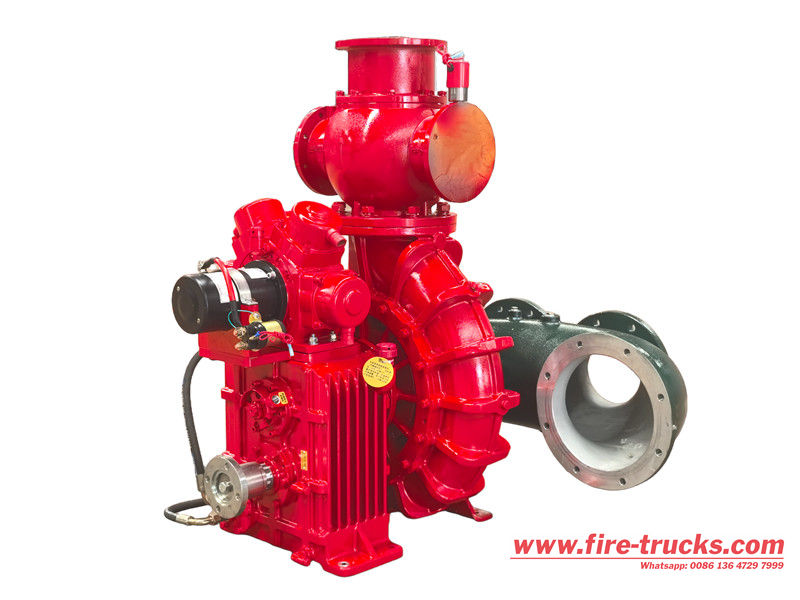
A bomba de espuma para combate a incêndio CB10/140 é um sistema de abastecimento de água para incêndio comumente utilizado, tanto em veículos quanto em instalações fixas, com pressão nominal de 1,0 MPa e vazão nominal de 140 L/s, atendendo às necessidades básicas de abastecimento de água em sistemas de combate a incêndio. O corpo e o rotor da bomba são fabricados com materiais de alta qualidade e resistentes ao desgaste, oferecendo resistência à corrosão e à alta pressão. Possui um design de entrada dupla para troca rápida da fonte de água e é acionado por um motor de alta eficiência ou motor a diesel, atingindo um tempo de resposta de inicialização de 30 segundos ou menos. Com seu design compacto, fácil manutenção e operação confiável, o Bomba de espuma para combate a incêndio CB10/140 É um equipamento vital para garantir o abastecimento eficiente de água em operações de combate a incêndios. A bomba de incêndio de baixa pressão CB10/140-XZ, montada em caminhão, possui uma estrutura centrífuga de estágio único com carcaça em liga de alumínio e rotor de latão. Utiliza um sistema de escorva elétrica com quatro pistões e acionamento elétrico. A bomba de espuma opcional CB10/20 utiliza um mecanismo de separação pneumática. Este produto oferece excelente desempenho, estrutura compacta, operação simples e fácil manutenção. A bomba de incêndio CB10/140-XZ é uma bomba de água centrífuga de estágio único usada em caminhões de bombeiros, caracterizada por seu dispositivo de escorva de dois pistões que engata e desengata automaticamente. Ela foi projetada para alto desempenho com uma estrutura compacta, operação fácil e manutenção conveniente. As principais especificações incluem uma vazão de 140 L/s e uma pressão de saída de 1,0 MPa a uma velocidade nominal de 2600 rpm. » . Princípio de funcionamento da bomba de espuma para combate a incêndios CB10/140 ● Ingestão de água e concentrado de espuma: A água é retirada de um reservatório e o concentrado de espuma é retirado do tanque de armazenamento. ● Proporção: O dosador mistura o concentrado de espuma com a água numa proporção predeterminada. ● Pressurização: A bomba pressuriza a mistura, aumentando sua velocidade e pressão. ● Descarga: A solução de espuma pressurizada é impulsionada através da mangueira de descarga até o bocal, onde é lançada sobre o fogo. ● Supressão de incêndios: A espuma envolve a fonte de combustível, separando-a do oxigênio e extinguindo o fogo. » . Apresentação detalhada da bomba de espuma para combate a incêndios CB10/140 1. Projeto estrutural superior, desempenho estável e confiável: ● O Bomba de incêndio CB10/140 Apresenta um design centrífugo de estágio único e é construído em liga de alumínio de alta resistência, oferecendo vantagens como leveza, resistência à corrosão e resistência a altas temperaturas. ● A estrutura interna da bomba é usinada com precisão, garantindo um fluxo suave e excelente desempenho hidráulico. Uma vedação mecânica impede vazamentos e assegura confiabilida...
Detalhes
Por favor, continue lendo, fique por dentro, inscreva-se e nós o convidamos a nos dizer o que você pensa.

 Rede IPv6 suportada

 português
 English
 français
 Deutsch
 русский
 italiano
 español
 Nederlands
 العربية
 日本語
日本語 한국의
한국의 Türkçe
 Melayu
 ไทย
ไทย Tiếng Việt
 Indonesia
  中文
中文 қазақ
қазақ Filipino
 မြန်မာ
 српски